Monday, April 6, 2009

10 Tips to “Living the (Healthy!) Sweet Life”

Last week, Edith Flowers, one of the Mom in the City reviewers, was able to attend a “Live the Sweet Life!” event sponsored by SPLENDA Brand Sweetener. At the event, top parenting experts (including Tanya Zuckerbrot, Cathy Riva, Chef Laura Diaz Brown and Michele Borba) and celebrity mom (Melora Hardin of “The Office”) came together to discuss solutions to make moms’ lives “a little sweeter”. Below, is her recap…

On March 30, 2009, I had a great opportunity to be surrounded by a group of mom-panelists (pediatrician and parenting advisors, nutritionist, etc – all moms!) who provided expert advice, tips and knowledge. I left there feeling armed to face the challenges I have as a mom of two girls (3 and 5 years of age). Some of the things I learned and wanted to share are:

1. Nutrition is the #1 concern: 79% of moms find nutrition to be their #1 concern above anything else – including saving for college and life insurance.

2. Veggies:
Kids usually acquire a taste for foods that they are constantly given. Even after many trials and refusals, keep giving kids the same vegetable for 2 weeks every day. They will (usually) latch on to it/acquire a taste for it.

3. Art of Replacement: If you take away unhealthy snacks or candy from your kids appease them by ALWAYS providing a replacement. For example, you can say something like “No cookie right now but how about this granola bar with great nuts and tasty fruits that will also make you strong and healthy?”

4. Wise Shopping:
Let your kid(s) accompany you to go food shopping and have them pick some healthy foods. For example, if the kid can read, ask him to search for a cereal with (x) grams of fiber on the label. It is found that when the kid assists with choosing the food items, he is usually inclined to eat it when it’s brought home.

5. Rewarding/Treats: Don’t reward good behavior with sweets and cookies. Rather, use other incentives (i.e. stamps, a movie, etc.) When you award/reward with unhealthy foods it sends a message to the kid that he can gain happiness from eating candies and cookies. That has the potential to have him do the same when he is older. For example, the thought process will be “Today I am feeling sad, so I will just buy a bar of chocolate or a pint of ice-cream and then I’ll feel so much better”. Store up healthy treats that you know the kid likes and give those as treats rather than the sweets.

6. Don’t Be Too Rigid:
When your kid goes to a party and picks up a candy to put in his mouth, don’t take it away or scold him – let him have one. It is just for that day. Experts have found that when you are too rigid with children and only allow them to eat healthy, they can become resentful and ‘pig out’ behind your back especially when they are with their friends. This may result in having them develop insecurities, deceit and lack of trust in your guidance - and even food disorders.

7: Halloween Tips:
(These tips also work well for other candy-giving holidays i.e. EASTER!)

(a) Empty out the goody bag and have the kid choose 10 pieces that he likes. Then you (secretly) pull out a few of his favorite pieces and hide them in case he ever wants to have them again, you can pull it out from that secret spot. Either dump the rest or buy them from the kid (if he is older) and have him save the money to get something healthy for himself with the cash.

(b) Play ‘sorting’. Sit down and put all of the lollipops together, all of the gum together, etc. Then have the child pick 2-3 from each pile and dump the rest.

(c) Make rules. Kids can have only one per week, etc

(d) When kids drop by to trick or treat, you can give them other goodies instead of candy (i.e. pencils, note book, small toys, stickers, etc). Bring your kid(s) along when you shop for the items to give and have your kids focus on buying non candy items to give away.

(e) Use “out of sight out of mind”. Pull out a few that the child likes (have him choose) them keep the few picks on top of the refrigerator. Hide the rest (the majority). Eventually because the sweets are not in sight, the child usually forgets that they are there. Later (after a couple of months), simply throw the rest out.

8. Be Creative:
Make your own ice cream and cookies –USE SPLENDA in it! Have your child choose their favorite fruit to add to the ice-cream and cookies and educate them on the nutritious value that fruit provides.

9. Praise a lot.
When your child makes good food decisions say things like “well done”, “awesome”, “great job”, etc.

What I will always remember … and this is my #1 ‘take away’….

10. BUILD HEALTH AND CONFIDENCE: As I walked out of the building, what stuck with me the most was that when I have my children choose their healthy foods in the shopping aisle/when I reward their good behavior with healthy treats instead of candies/ when I train my children to think healthy and make them feel armed to choose healthy habits …I am not only making them healthy but I am building their CONFIDENCE! So if I practice some of these tips, I am preparing my children to avoid diseases and illnesses and preparing them to face the world as well rounded adults with the ability to make right decisions.

(On a side note, if you use SPLENDA, you can find their current promotions and get coupons for various Splenda products on this page.)

Yoga for Everyone

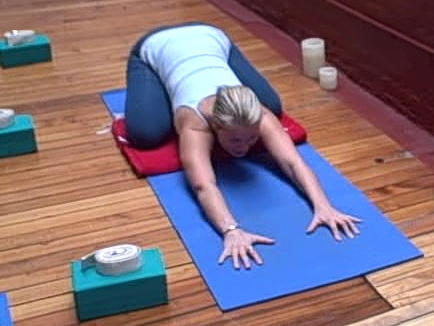
Last Saturday, I hosted a private Mom in the City yoga party at the (temporary) Soho branch of YogaWorks. Around a dozen Mom in the City readers met up for a wonderful mixed-level yoga class. I only received positive feedback from the women that took the class. The instructor was very patient and helpful to the point that several of the attendees stayed after to get advice regarding their posture and various back problems.

Our Amazing Instructor

Our Amazing Instructor

womenyoga-2 womenyoga2-2

After the class, we had a tasty lunch of various salads from 218. There were also several giveaways from Mom in the City sponsors. (Everyone went home with something!)

If you live in the NYC area, you can try out a YogaWorks class for free in April. (Don’t be surprised if you decide to continue taking classes – they really are good!) Below is the schedule:

Westside
Tuesdays | April 7, 14, 21, 28 | 2:00 – 3:00pm
Sundays | April 5, 19, 26 | 10:30 - 11:30am
No free orientation Easter Sunday 4/12

Eastside
Wednesdays | April 1, 8, 15, 22, 29 | 9:30-10:30 am
Sundays | April 5, 19, 26 | 6:00 -7:00pm
No free orientation Easter Sunday 4/12

Midtown
Thursdays | April 2, 9, 16, 23, 30 | 7:30 - 9:00 pm

Downtown
Mondays | April 6, 13, 20, 27 | 11:30 – 12:30pm
Sundays | April 5, 19, 26 |5:45-6:45pm
No free orientation Easter Sunday 4/12

Westchester
Wednesdays | April 1, 8, 15, 22, 29 | 2:00 – 3:00pm
Sundays | April 5, 19, 26 | 2:00 – 3:00pm
No free orientation Easter Sunday 4/12

Soho
Sundays | April 5, 19, 26 | 3:30 – 4:30pm
No free orientation Easter Sunday 4/12

Enjoy!

ZING ZANG ZOOM

Last Friday, I went to Ringling Bros. and Barnum & Bailey’s all-new ZING ZANG ZOOM circus playing at Madison Square Garden with Sean and a family friend. (Michael was coming with us, but his school trip to the Central Park Zoo was switched to that day at the last minute. That’s another story though…)

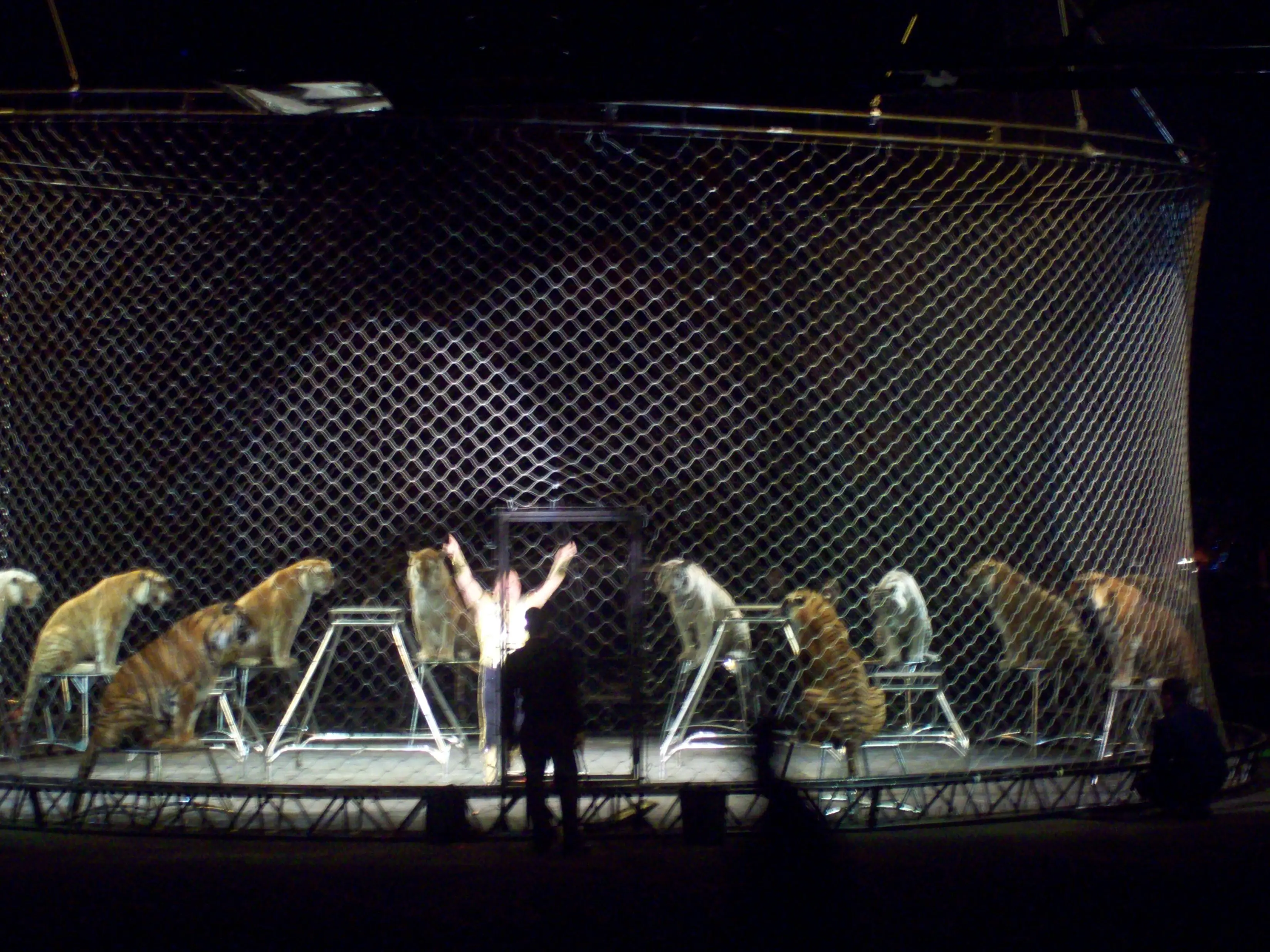
This circus was so amazing! Because I do parenting writing, our family is fortunate in that we get to see practically all of the circuses that come to town. This was one of my favorites. It really was a pleasant surprise, because I didn’t really enjoy the last Ringling Bros. and Barnum & Bailey’s circus that came to Madison Square Garden. (It had too much going on at the same time on one stage for me to enjoy it visually.) In contrast, ZING ZANG ZOOM had the perfect amount of activity (in my opinion). I thoroughly enjoyed myself. Sean did too (and he’s hard to impress!). He was clapping through most of the performance. Overall, I liked that this event had the feel of a great, old-fashioned circus. I have seen many circuses, but this was the first time that I saw someone get shot out of a cannon! Other highlights included the dancing elephants and the Bengal tigers. We took an adult family friend with us and he enjoyed it most of all! Below are some of the pictures that my friend took:

The Cannon

The Cannon

Safe Landing

Safe Landing

Bengal Tigers

Bengal Tigers

Elephants

Elephants

If you get the opportunity to do so, definitely go. You can purchase a 4-pack of tickets for only $44 by logging on to www.ticketmaster.com and entering the coupon code: MOM for select show dates (Sunday April 5: 11:00am, 3:15pm, 7:30pm; Monday April 6: 3:15pm, 7:30pm; April 10-12: 11:00am, 3:15pm, 7:30 pm; and Monday April 13: 11:00am, 3:15pm). Also FYI: all Ringling Brother’s circus shows now feature a free pre-show event for all ticket holders that begins an hour before the show begins. During this time, you can bring your family down to the circus floor and meet some of the performers and clowns as well as see some acrobat performances and an elephant that paints!

Having Fun on Spring Break (While Staying on Budget)

NYC public school students are out of school on Spring Break from 4/9 to 4/17. We went away in February, so we won’t be going on a family trip this year. From what I’ve been hearing/reading, a lot of families are cutting back on trips due to the economy.

Fortunately, there are plenty of fun, inexpensive activities to do with kids. Beth Engelman a “Do It Yourself” expert was kind enough to share some ideas with us below. Beth also has many other ideas listed on her website www.momonashoestring.com.

Spring Break Article ~ Having Fun while Staying on Budget
By Beth Engelman

Spring Break is right around the corner and this year your vacation consists of keeping your kids, happy, stimulated and entertained without breaking the bank. Here are a few inexpensive games, activities and recipes you can do with your kids

Be the Mommy for the Morning!
This idea came to me from a dear friend, Amy Hamill, who is one of four children (all girls). Amy’s very smart mother would allow each of her daughters to be the mommy for the morning. That meant the child got to make all the morning decisions including making breakfast, getting everyone dressed, choosing a morning activity, you name it! Giving your children this type of ownership strengthens their self-esteem and self-reliance as well as provides a lot of fun and memories for your family.

“YOJNE” Backwards Day

Another fun idea is the timed honored Backwards Day. Basically you and your kids spend you day in reverse! For example, when you wake up in the morning, watch a movie with popcorn. After the movie, cook up a little pizza for “dinner”. In the afternoon, make a big bubble bath for your children using handmade “paints” (shampoo mixed with food coloring). Kids can stay in the bath till the water gets cold, painting on the walls and tub with their handmade “paints.” After their bath, everyone gets into their jammies for a delicious pancake breakfast.

Capture the Moment with Pictures
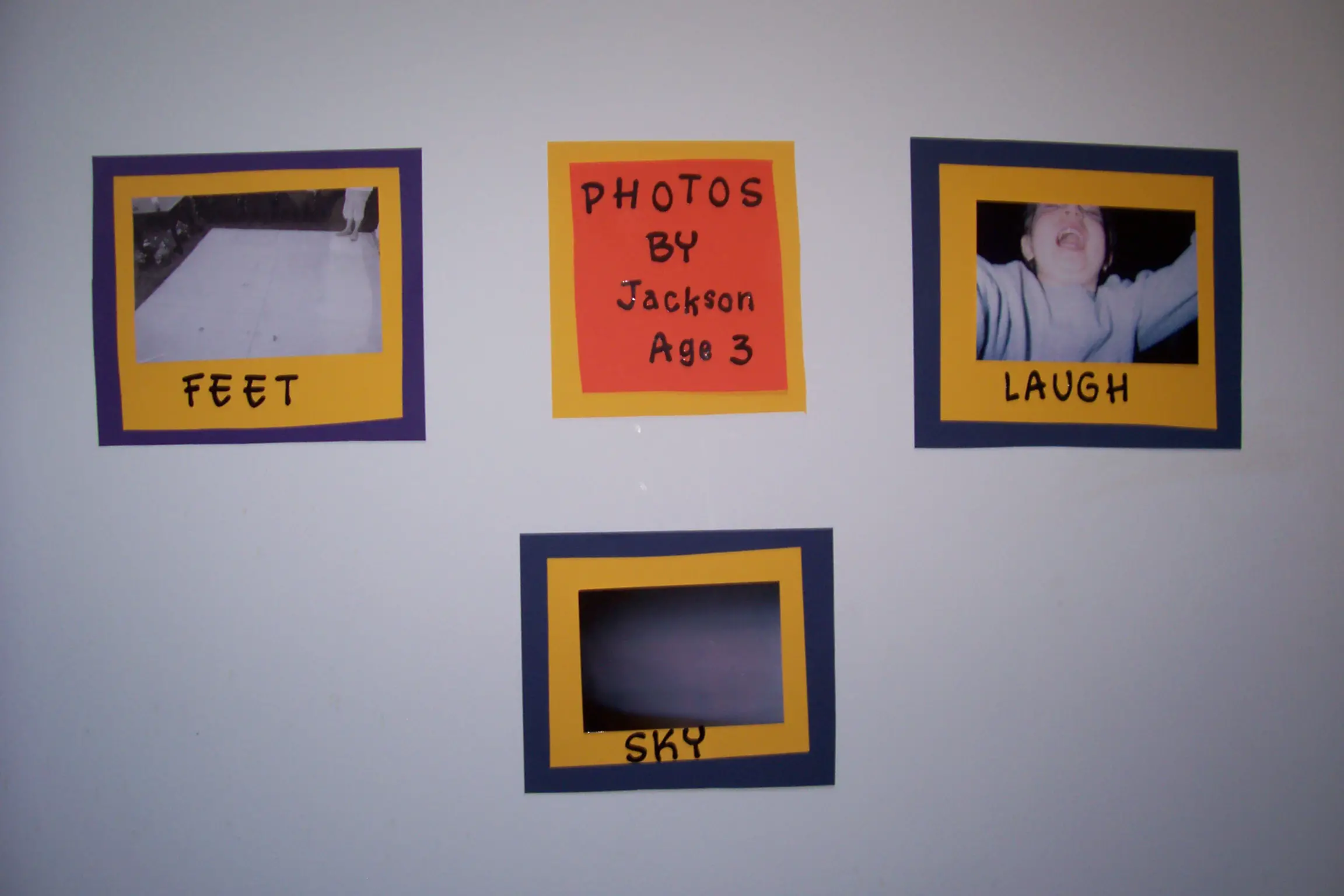
A wonderful activity to do when the weather warms up is to create a photo gallery with your children. The first step is to get a disposable camera and then take your children out for a walk. I recommend a disposable camera because they are inexpensive and more importantly, they are fairly indestructible (which is always a plus when dealing with children). Take a walk around your neighborhood with your budding photographers and watch their imaginations run wild as they snap away at all the “cool” things they see. You might even consider taking your children into the city and letting them photograph the busy streetscapes and skyscrapers. Once the roll is finished, get the pictures developed and sort through them with your children, picking out the photos they like best. Together you and your children can create an art gallery by mounting their favorite pictures on colored paper and hanging them on an empty wall. Encourage your children to name each image just as a professional photographer would. To make the gallery theme even more special have a “gallery opening” where you invite family and friend over for a viewing. Be sure to serve refreshments. I recommend following the stained glass cookie recipe (listed below) for a delightful and colorful treat!
000_0389-2

Think Spring with Stained Glass Window Cookies
These cookies make great window decorations or are a tasty treat when served with cold milk!

You Will Need
-One bag of hard candies (Jolly Ranchers work well)
-1 roll of Pre-made sugar cookie dough or make your own sugar cookie dough.

-Step 1: Pre-heat over to 350.
-Step 2: Crush the hard candies into small pieces by placing them in a plastic bag and pounding them with a mallet (Let your kids do this – they’ll love being “allowed” to pound something).
-Step 3: Slice cold cookie dough into circles and roll out into 1/4-inch thick circles. Using a sharp knife cut a hole in the middle of each cookie and fill it with bits of broken candy.
-Step 4: Place cookies on a parchment paper lined cookie sheet (you do not want to ruin your cookie sheet!) Bake for 17-20 minutes or until cookies are brown and candy is melted. Allow to cool and enjoy! To hang your cookies in the window, punch a hole at the top of each cookie prior to baking and then thread ribbon or string through the hole once the cookies have cooled.

Open a restaurant in your home
Spring Break is the perfect time to get your kids interested in cooking and nutrition. Talk to your children about their favorite kinds of food, restaurants and store bought items. Encourage your children to look through cookbooks and recipe boxes for new ideas and twists on old favorites. To make the meal planning more memorable, let your children turn your kitchen into a restaurant for the night. Your chefs can shop with you for the needed groceries, design the menus, decorate the tables, pick the mood music and wait on their customers. Who knows, you might find your child is the next Wolfgang Puck.

Can’t go to the Beach? Watch the Waves with an Ocean in a Bottle
This is a great project that is easy to make, requires a few ingredients and teaches your a little science in the process.

You Will Need
-1 Clear Plastic Bottle with top (A liter soda bottle works well)
-½ - 1 Cup of vegetable oil
-Water
-Blue food coloring
-Glitter (optional)

Directions:
-Fill 2/3 of the bottle with water.
-Add oil until the bottle is almost full.
-Add a few drops of blue food coloring.
-Place cap on bottle and make sure it is screwed on tight.
-Now, move the bottle around and watch the glittery waves roll.

And For something really different…try Letterboxing
Check out www.letterboxing.org to learn about this fascinating and fun activity. Letterboxing is a community-organized treasure hunt where unconnected people place letterboxes throughout the United States. It is best to do with children over 5 and requires some planning and preparation. Be sure to check out the website or the book, The Letterboxer’s Companion by Randy Hall.

Friday, March 27, 2009

Dr. Harvey Karp’s Child Abuse Prevention Advice

April is National Child Abuse Prevention month. As such, this is the perfect time to hear top pediatrician Dr. Harvey Karp’s input on the topic. He is the creator of the best-selling Happiest Baby on the Block book and DVD. You can also find “Happiest Baby” class locations on his site.
book videodvd whitenoisecd

Shaken Baby Syndrome (SBS) is the most deadly form of child abuse. It is the #1 cause of death from any type of child abuse. Each year, 1500 babies are severely shaken - ending up in emergency room visits. 25% of those babies die while 66% of the survivors suffer brain damage. What is most shocking (to me anyway) is that these are very young babies - the average age is 4 months! This is only the tip of the iceberg though. It is assumed that more babies are shaken and suffer mild brain damage. They have just never been diagnosed.

Obviously, this is a serious problem. The main trigger for SBS attacks are crying babies. Some parents can’t handle their baby’s cry when they are stressed or exhausted. The crying (which can grate like fingernails on a chalk board to a parent’s nervous system) can literally push the parents over the edge. The combination of crying babies and exhaustion are also top causes for a variety of things including postpartum depression; mothers prematurely giving up breastfeeding; marital discord and Sudden Infant Death Syndrome(SIDS) – to quiet fussy babies, caregivers sometimes put them on their stomachs rather than their backs.

Fortunately, there are great resources, like Dr. Karp’s books, DVDs and classes, to help teach parents how to soothe their crying babies and boost infant sleep. Personally, I found the tips in his books (I bought both the baby and toddler ones when Michael was younger) very helpful. Now, I’ve learned that the DVDs are equally (if not better!) effective tools. In fact, the DVDs are being used in classes for teen parents, women suffering from postpartum depression, on military bases, etc. They are also being used in child abuse prevention programs across the county. In addition to the books and DVDs, there are 3,000+ Certified Happiest Baby Educators (CHBE) who teach the principles. You can find them on The Happiest Baby site. (On a side note, I was especially interested in the classes being taught on the military bases since my brother has been in the military since he was 18. With deployment issues, the young age of the parents and the families being away from their support systems, our military families definitely need this type of education!)

Basically, Dr. Karp teaches parents how to “switch on” their baby’s calming reflex. Parents are taught how to calm their baby’s cries in minutes and how to have their babies sleep an extra 1 to 3 hours (on average) at night. The trick about the calming reflex though is that you must do it exactly right or it won’t work. The 5 S’s covered in the book are: swaddling; side (or stomach), shhh, swinging and sucking. When done incorrectly (i.e. swaddling too lightly), the whole purpose is defeated. That’s why the DVDs are especially helpful visuals.

One thing that I wanted to point out is that it’s essential that men learn these techniques too since 70% of SBS attackers are men. An interesting thing that I learned is that (in studies) crying babies cause a physical stress reaction in both men and women. However, when asked, the women recognize that the crying is driving them crazy while the men don’t. They don’t realize that they are stressed until they snap. That’s the bad news. The good news is that men are better at baby calming then women, because they are more willing to follow specific directions. Once they learn that they can calm the baby down, it makes the men proud of themselves and makes them feel like they want to be with the baby more.

At the end of my time speaking with Dr. Karp, I asked him, “Do these tips work for all babies?” For the most part, the answer is “yes”. However, there is a small percentage (5%) of babies that they won’t help even when the parent is doing the 5 S’s right. Usually, that is because there is a medical problem, so parents should check with their baby’s doctor. (The tips don’t apply when babies are in some type of physical pain!) In any event, I think that The Happiest Baby books, DVDs (and their white noise CD) are valuable additions to the library of every expectant and new mom. In study after study, parents who have used these products feel more prepared (expectant parents) and much better (current parents) at calming their babies’ cries.

Friday, March 20, 2009

Reassurance Regarding Epidural Hematomas in Kids

Since Natasha Richardson died from an epidural hematoma, I have been thinking a lot about falls in general. I have especially been concerned about kids’ falls. Personally, I don’t know any mom whose kid has not fallen – off a bed, a sofa, or something. (Okay, one mom that I know claims her kid has never fallen off anything in his life, but I’m not quite sure that I believe her.) Anyway, I’ve been wondering whether I should take my kids to the hospital when they fall in the future. (I’m a pretty attentive mom, but I’m also a realist – they will fall again.)

Fortunately, I was able to talk to renowned pediatrician Dr. Harvey Karp this morning. (I was interviewing him regarding a totally unrelated topic, but he was kind enough to calm my fears.) First of all, he said that Ms. Richardson’s condition was an uncommon event in general even more so in regards to young children. Their skull bones are more flexible and not as easily broken. When our kids do fall, for the most part we just need to keep any eye on them for the next couple of hours. If it happens at night, we should wake them up occasionally to make sure that they’re alright. When do we need to take them to the hospital? If they have a big knock on their head, it’s better to be safe than sorry. Also, if the kid gets knocked out when they hit their head, complain about headaches or start vomiting – it’s time to get medical attention. As a final note of reassurance, Dr. Karp shared that in his 30+ years as a pediatrician, he has never come across a case of epidural hematoma in kids (and he has treated many kids who have fallen!). All that to say – it happens, but it’s extremely rare in its occurrence. Whew - that’s a relief!

Don’t Be Nervous About Your Child’s Development

One of the questions that I get asked the most by my moms - especially first-time moms - is “Is this normal?” in regards to their kids’ development at various stages. There’s such a wide range of “normal” that 9 times out of 10, the answer is “yes”. (Of course, I’m not a pediatrician or specialist, so I always encourage moms to also speak with the professionals in their lives!)

Although I’m not an “expert”, one of the best parts of being a parenting writer is that I have access to them! As such, I asked Ellenmorris Tiegerman, Ph.D., the Founder and Executive Director at the School for Language and Communication Development, to share about this topic. She specializes in children with language and autism spectrum disorders. Below are her thoughts:

“Parents are often concerned at different points in their children’s lives that something is developmentally wrong. There are several misconceptions that parents need to understand as they proceed to gather information and to figure out what their child needs. Firstly, the term “wrong” is not helpful. If there is a developmental difference between your child and his peers, most of the time the “difference” is just that – a learning style difference. Children do not all learn in exactly the same way. Nor do they learn at exactly the same rate of development. Sometimes children are shy or they have very specific activity preferences. None of these things indicate either a disorder or a disability. So my recommendation to parents who are just beginning this process is to calm down and put your fears aside. At this stage, parents need to gather information.

Secondly, there are several helpful sites for parents who have young children (the American Speech Language and Hearing Association at www.asha.org). This site has a section specifically for parents who are interested in determining what skills children acquire at specific ages. This information is usually presented on a developmental chart. The advantage of looking at a developmental chart is that parents can compare their children’s behavior to other typical children at specific ages. So, the parent who is concerned about her 2-year-old who only has 10 words can look at a developmental chart for comparison purposes. Many two-year-olds have a vocabulary of 100 to 200 words and are beginning to combine words to create short sentences. What if a parent is still anxious about the difference between her child and the skills described on the developmental chart?

As I indicated earlier, it is important for parents to understand that normal development does not have exact ages and stages. Keep in mind that social environments and families as well as cultural experiences are vastly different. As a result, what children know will be directly affected by the experiences that you provide such as play dates, museums, dance classes, art classes, music classes and most important adult/child conversations. Talk to your child – constantly. The most important indicator of learning development and success is language. Teach your children about words. Teach your children to read books, books and more books.

Okay, so after all of this, parents discover that there is a 3- to 6-month difference between their child’s skills and the developmental chart. Most of the time a difference of three to six months is quite typical since children are not robots, they are little language processors who are highly specialized and unique. Children hear everything, children process everything but they learn in their own special way. Look at your child in relation to his peers. Is he standing on the sideline? Is he watching? Does he interact? Does he approach other children? Does he play with toys? When a child has a disability, he is usually disengaged, isolated and not playing with toys appropriately.

If parents are concerned, then the first professional to speak to is the pediatrician. If the pediatrician has concerns, then she can advise parents about clinical practitioners who can appropriately evaluate a young child’s hearing, language and social skills. Formalized evaluations will then provide quantitative as well as qualitative information to distinguish between a learning difference and a developmental delay. Usually a developmental delay of 8 to 12 months signals the need for intervention services. In some communities, a child has to present a difference of 12 to 18 months before services are provided.

Remember, a developmental difference is not a developmental delay. There are many parent-friendly guidebooks that provide valuable developmental information, so relax. Consider this journey of leaning about your child as one of exploration and wonderment. Even after all of these years, I am always amazed at how easily and readily typical children learn the most complicated concepts, skills and lessons. Typical children are natural learners. Their differences relate to how they learn. The best thing for parents to do is to watch their children to see what they are doing and how they are doing it.

Suggested Books:
-What is Language? What is Speech?

-The Portable Pediatrician: A Practicing Pediatrician’s Guide to Your Child’s Growth, Development, Health and Behavior, from Birth to Age Five by Laura W. Nathanson.

-Alphabet Kids From ADD to Zellweger Syndrome by Robbie Woliver.

-Language Disorders in Children Real Families, Real Issues, and Real Interventions by Ellenmorris Tiegerman-Farber and Christine Radziewicz.”